A startup marketing consultant builds and executes go-to-market strategy for early-stage companies that don't yet have the internal team to do it themselves. They cover demand generation, brand messaging, SEO, digital marketing, and customer acquisition, typically engaging for three to six months with weekly touchpoints, according to Kamyar Shah's startup consulting resource. Hourly rates run from $50 to over $200, while fractional CMOs bill $5,000 to $15,000 per month, based on Twine's marketing consultant rate data and Fractional CMO Partners' pricing breakdown.
 Consultant rates and fractional CMO pricing at a glance.
Most founders search for a startup marketing consultant at a fork in the road: either growth has stalled and they can't figure out why, or the product is ready and nobody's shown up to buy it. Both situations are fixable. The question is knowing who to call and what to expect when you do.
What a Startup Marketing Consultant Actually Does
A startup marketing consultant translates product potential into market traction by combining strategy with hands-on execution across the channels that matter most for early-stage growth.
The first thing most consultants do is audit what's already there. Positioning, messaging, current channels, conversion points. Then they pressure-test assumptions about the ideal customer profile. A lot of B2B startups think they know their ICP. Many don't, not really.
From there, the work splits into two tracks. The first is strategic: building out a go-to-market strategy, mapping the total addressable market, identifying the right segments, and setting priorities. The second is execution: turning that strategy into campaigns, content, SEO programs, and lead generation systems that actually run.
What sets a startup marketing consultant apart from a general marketing consultant is context. Startups operate under resource constraints and timeline pressure that established companies don't face. A consultant who has only worked with enterprise clients will often over-engineer early-stage problems or push spend before product-market fit is confirmed. That's a waste of a runway most founders can't afford.
Services Startup Marketing Consultants Provide
Startup marketing consultants deliver a range of services tied directly to go-to-market strategy, demand generation, and measurable revenue outcomes for early-stage companies.
The service mix varies by consultant and stage, but these are the areas where good startup marketing consultants consistently create value:
- Go-to-market strategy: Defining launch plans, channel prioritization, and competitive positioning before a single dollar goes to paid media.
- Brand messaging and value proposition: Crafting copy that converts, from homepage headlines to sales deck narratives. Most B2B startups underinvest here and pay for it in low conversion rates.
- SEO and digital marketing: Building organic acquisition channels that compound over time, especially important for SaaS companies with longer sales cycles.
- Demand generation and lead generation: Setting up the systems that bring qualified buyers into the funnel, including paid search, content programs, and outbound sequences.
- Market research and ICP development: Interviewing customers, analyzing competitors, and building the buyer profiles that make every other marketing activity more effective.
- Product-market fit validation: Testing messaging and offer structures against real market feedback before scaling spend.
On the content side, the ROI case is strong. Genesys Growth's content marketing ROI analysis puts B2B content marketing returns at 748%. And the U.S. Chamber of Commerce's B2B email marketing data shows email delivers $42 for every dollar spent. A startup marketing consultant who ignores these channels isn't doing their job.
 B2B content marketing ROI: 748% (Genesys Growth).
 Email delivers $42 per $1 spent (U.S. Chamber of Commerce).
Top Startup Marketing Consultants (Individual Experts)
The best individual startup marketing consultants combine strategic depth with execution capability, typically specializing in either B2B SaaS, fintech, or consumer growth.
Individual consultants tend to be former heads of marketing or CMOs who moved into consulting after scaling a company through Series A or B. They bring pattern recognition from having solved your exact problem before, just somewhere else. Below are profiles of well-regarded names across the startup marketing space.
Profiles of Leading Individual Consultants
| Consultant | Specialization | Best For |
|---|---|---|
| Hiten Shah | SaaS marketing strategy, growth marketing | B2B SaaS startups at Seed to Series A |
| Rand Fishkin | SEO, brand marketing, audience building | Content-led B2B startups, early-stage SEO strategy |
| April Dunford | Product positioning, value proposition, brand messaging | B2B startups struggling with messaging and positioning |
| Dave Gerhardt | B2B brand marketing, demand generation | SaaS companies building brand-led growth |
| Lenny Rachitsky | Growth marketing, product-market fit, consumer growth | Consumer and B2B startups at early growth stages |
Each of these consultants has built a public body of work, which makes vetting them straightforward. Read their writing. Check whether their frameworks apply to your stage and market. The median total salary for marketing consultants sits at $101,000 according to Coursera's marketing consultant career guide, but top individual consultants with deep B2B SaaS expertise often command significantly more.
Best Startup Marketing Consultancy Firms
Startup marketing consultancy firms offer broader bandwidth than individual consultants, covering multiple disciplines simultaneously and scaling up faster when a go-to-market launch demands it.
The trade-off is that firms introduce account management layers. You may pitch the senior partner and work with a junior team. Worth asking about directly before signing anything.
Profiles of Leading Consultancy Firms
| Firm | Specialization | Best For |
|---|---|---|
| Demand Curve | Growth marketing, paid acquisition, SEO | B2B and consumer startups scaling past product-market fit |
| Growth Unhinged | B2B SaaS marketing strategy, demand generation | SaaS companies building repeatable acquisition channels |
| Stackmatix | Digital marketing, lead generation, analytics | Early-stage startups needing full-funnel marketing execution |
| Kalungi | Fractional CMO, B2B SaaS go-to-market strategy | SaaS startups that need CMO-level leadership without full-time cost |
 Demand Curve website screenshot (referenced above).
 Growth Unhinged website screenshot (referenced above).
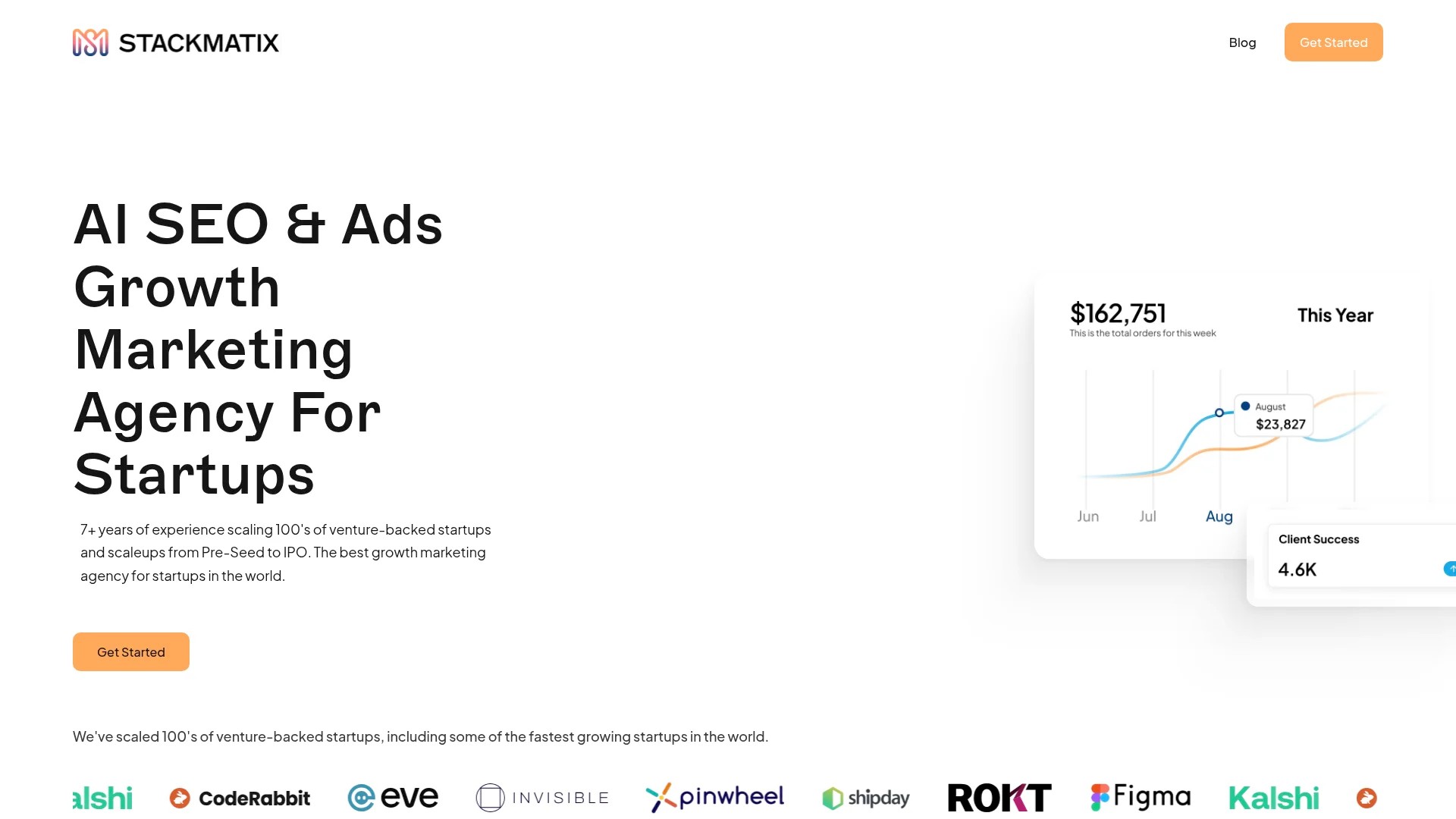 Stackmatix website screenshot (referenced above).
 Kalungi website screenshot (referenced above).
Most scaling startups end up using both a consultant and a firm at different stages, according to Stackmatix's analysis of consultant versus agency approaches. A consultant typically sets the strategy; a firm handles execution at volume. That's not redundancy. It's a smart division of labor.
Individual Consultant vs. Consultancy Firm: Which Fits Your Startup?
Choosing between an individual startup marketing consultant and a consultancy firm depends on whether your primary need is strategic clarity or execution capacity.
Individual consultants are better for early-stage work: sharpening your go-to-market strategy, nailing brand messaging, confirming product-market fit, or diagnosing why lead generation has plateaued. They move fast and think like founders. The downside is bandwidth. One person can only run so many channels simultaneously.
Consultancy firms carry more firepower. If you need SEO, paid media, email marketing, and content running in parallel, a firm can staff each channel with a specialist. The cost is higher and the senior attention is often thinner.
A practical rule: if you need answers, hire an individual marketing consultant. If you need output at scale, hire a firm. Many B2B startups use a consultant to define the strategy and a firm to execute it, and that combination works well when the handoff is clean.
 Rule of thumb: answers → individual consultant; scale → firm.
How to Choose the Right Startup Marketing Consultant
Selecting the right startup marketing consultant requires matching their specific experience to your stage, your market, and the problem you actually need solved, not the problem you think you have.
Start by being precise about the problem. A consultant who specializes in SaaS demand generation is not the right hire for a fintech company that needs brand positioning work. Specificity beats general experience every time at the early stage.
How to Vet a Consultant Before You Sign
Vetting a consultant properly takes more than one call. Ask for references from clients at a similar stage and market. Speak to those references directly and ask whether the consultant's recommendations were original or templated, whether they showed up after the strategy deck was delivered, and whether the engagement produced measurable results.
Review their public work. Any startup marketing consultant worth hiring has a point of view that's visible somewhere: a newsletter, a blog, talks, or case studies. If you can't find evidence they think independently about marketing strategy, that's a data point.
Consultant Interview Questions Worth Asking
- What's your go-to-market strategy framework, and how do you adapt it for companies pre-product-market fit versus post?
- Walk me through a B2B startup engagement where demand generation took longer than expected. What did you do?
- How do you handle a situation where the founders disagree with your marketing strategy recommendation?
- What does success look like at the end of month three, and how will we measure it?
Those four questions separate consultants who have thought carefully about their craft from those selling a standard playbook. The answers also tell you a lot about whether their communication style will work with your team.
Key Qualities to Look for in a Startup Marketing Consultant
The most effective startup marketing consultants combine deep B2B or SaaS domain knowledge with the ability to execute hands-on, not just advise from a distance.
Strategy without execution is a document. Execution without strategy is burning money. The consultants who consistently deliver for early-stage companies are comfortable doing both, especially in the first 90 days when the team is small and there's no one else to run the playbook.
Look for these qualities specifically:
- Stage-specific experience: They should know the difference between Seed-stage marketing and Series A marketing. The tactics are different, the budget assumptions are different, and the pressure is different.
- Channel credibility: If your primary channel will be SEO and digital marketing, they should have a track record in those channels, not just a theoretical understanding.
- Clear thinking on product-market fit: A startup marketing consultant who pushes growth spend before product-market fit is confirmed is a liability. The right consultant slows you down when it matters.
- Transparent pricing and scope: Vague scopes produce bad engagements. A good consultant defines deliverables clearly and adjusts when the situation changes.
One more thing that rarely gets said: communication style matters as much as expertise. A brilliant consultant who won't push back on bad founder decisions, or who can't explain their reasoning to a non-marketing team, will underdeliver. Hire for fit, not just credentials.
Frequently Asked Questions About Startup Marketing Consultants
What does a startup marketing consultant charge?
Startup marketing consultant hourly rates range from $50 to over $200, depending on specialization and experience, per Twine's consultant rate analysis. Fractional CMOs, who take on a part-time leadership role, typically charge between $5,000 and $15,000 per month, according to Fractional CMO Partners.
When should a startup hire a marketing consultant?
Most startups benefit from a marketing consultant at two moments: before their first major go-to-market launch and immediately after Series A when scaling demand generation without a full in-house team. If your cost per acquisition is rising and you can't explain why, that's also a strong signal.
What's the difference between a startup marketing consultant and a marketing agency?
A startup marketing consultant typically focuses on strategy, positioning, and go-to-market direction. A marketing agency executes at channel level and often reports on metrics like click-through rates rather than revenue outcomes, as noted in McCracken Marketing's comparison of the two models. Many B2B startups use both.
How do I know if a consultant is right for my B2B startup?
Check their B2B SaaS or sector-specific track record. Ask for references from companies at your stage. Run through the consultant interview questions above. And make sure their go-to-market strategy approach matches your actual problem, not a generic growth framework they apply to every client.
How long does a typical startup marketing consultant engagement last?
A typical engagement runs three to six months with weekly check-ins, per Kamyar Shah's consulting engagement guide. Strategy-only engagements can be shorter. Embedded execution work often extends longer as the startup scales.
 Typical engagements run 3–6 months with weekly touchpoints.
Choosing the right startup marketing consultant is one of the highest-leverage decisions an early-stage founder makes. Get the strategy right early and every downstream activity, from SEO to paid demand generation to brand messaging, becomes more efficient. Get it wrong and you'll spend six months and a significant chunk of runway finding out. Vet thoroughly, ask direct questions, and don't hire someone because they sound confident. Hire them because their references confirmed results.